
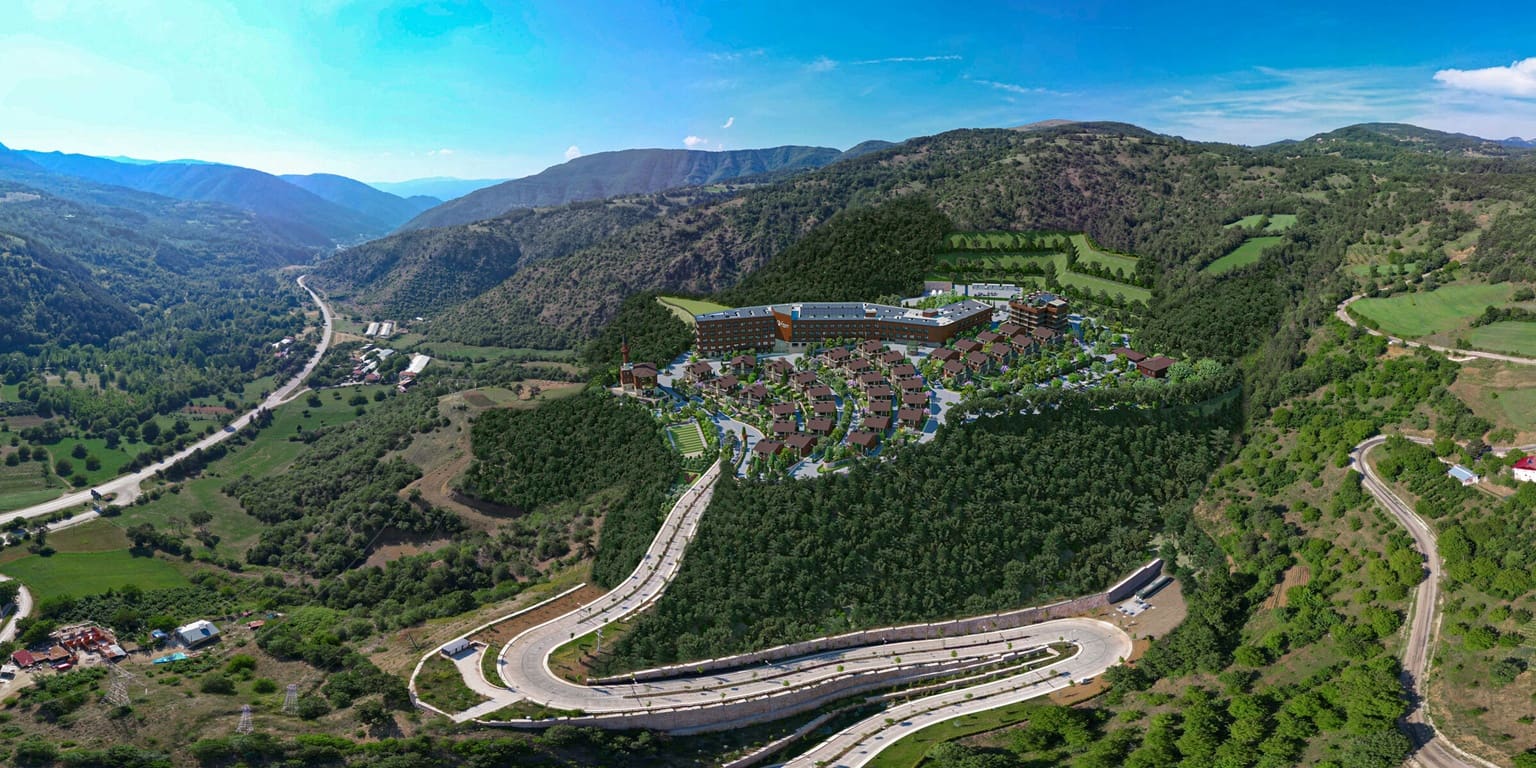
Isra Holding is pressing ahead with the second phase of V Orman Resort, a mixed-use development in Bolu, Turkey, with a 5-star hotel now under construction and scheduled to open in 2027. The project sits on a sloped, forested site in the Mudurnu district and is designed by ECCE Group.
What makes this one worth watching is the site logic. Rather than one large hotel block, the developer has spread the complex horizontally across the terrain—a deliberate move to avoid disrupting the landscape. It also solves a practical problem: the resort is far from any town, so it has to function as a self-contained village.
A Village Before a Hotel
Phase 1, completed in late 2023, delivered 70 triplex villas and 46 timeshare apartments (18 units of 2+1, 28 of 1+1). Around that residential core, the developer built out a long list of shared infrastructure: a mosque, spa, supermarket, adventure park, library, amphitheater, sports village, thermal areas, animal shelters, and botanical gardens—all sitting across 25 acres of built land and 40 hectares of recreation area.
For suppliers, that list matters. A project this self-sufficient needs vendors across categories that don’t usually overlap on a single site: hospitality FF&E alongside retail fixtures, medical-grade fit-outs, and recreational equipment.
The Hotel Itself
Phase 2 is where the 5-star hotel comes in. It spans 45,000 square meters and will hold 204 rooms across several categories, such as standard, family, king, suite, deluxe, and accessible. The building will also house a spa, sports center, game room, cafe, restaurant, congress facilities, a parking garage, a hairdresser, beauty center, supermarket, jewelry store, alternative medicine center, infirmary, and laundry.
That’s a wide spread of unit types under one roof, which usually signals a longer, more complex procurement timeline, which is worth noting for anyone tracking specification windows on this one.
Materials reflect the site’s climate and geography rather than a generic luxury template. Facades use regional travertine and pine, and because Bolu gets cold winters, the roof pitch has been increased and built as a wooden warm roof. Inside, expect wood flooring in guest rooms, marble in corridors and stairwells, and ceramic tile in bathrooms, with wood carried through into furniture, including kitchen and bed units.
The apartment interiors take a slightly different path. In the 2+1 and 1+1 units, the design leans more contemporary, a shift from the villas’ heavier use of natural material, apparently aimed at widening the property’s appeal beyond one type of buyer.
With Phase 2 now under construction and a 2027 opening on the books, the next couple of years will be the real test of whether the horizontal, village-style approach holds up at hotel scale.