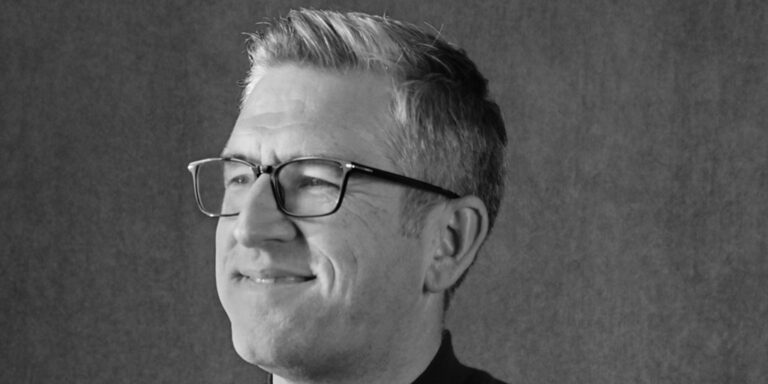

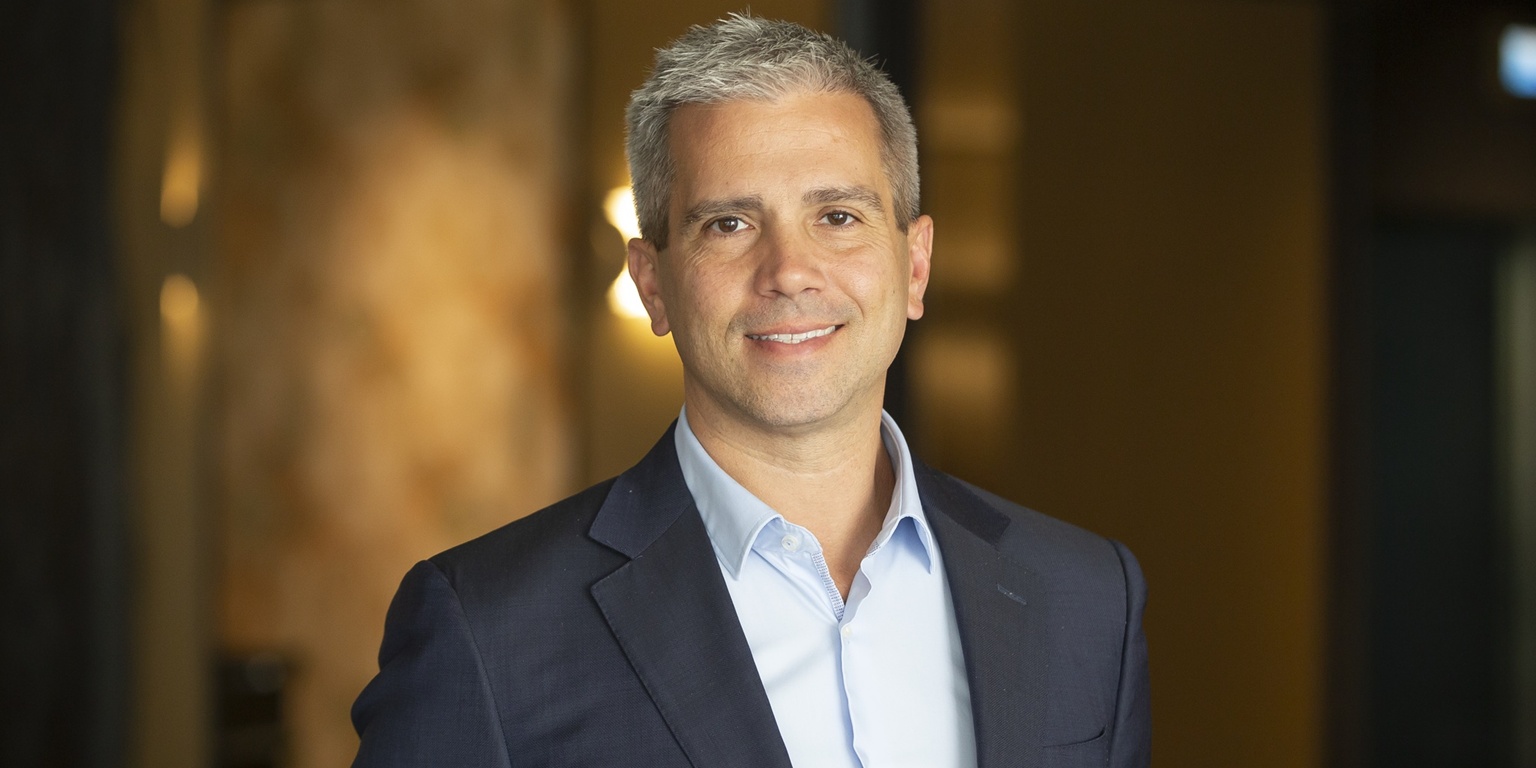
Langham Hospitality Group (LHG) named Josh Littman its new Head of Development – EMEA earlier this year, putting him in charge of growing the Group’s footprint across Europe, the Middle East, and Africa. The appointment lands at a busy moment for the Group in the region, with The Langham, Diriyah nearing its opening in Saudi Arabia and The Langham, Venice on track for 2027.
Littman arrives with more than 20 years in the industry, having spent his career moving between brand-side development roles and advisory work across the hospitality sector. That back-and-forth between operator and advisory perspectives gives him a great vantage point on deal-making, one he speaks to throughout this interview.
We asked him about his new role, what’s changed in hotel development over the past two decades, and which EMEA markets he thinks are still flying under the radar.
You’ve moved between brand-side development roles (IHG, Hard Rock, Starwood) and advisory work (AECOM, PKF). How has sitting on the advisory side shaped the way you now evaluate deals as a brand executive?
If one is going into a hotel development role, or likely any senior job across a range of real estate asset classes, having a background in advisory/feasibility/consulting can be one of the best ways to learn the ropes and the basic fundamentals of analysis given the broad access to projects, owners, and brands. The skills one learns include such basic principles as P&L analysis, market supply/demand, and basic cash flow and investment analysis. The use of these fundamentals continues on a near-daily basis throughout one’s career in hotel real estate.
Although this can easily be learned working in-house at a major hotel group, I found that the breadth of experience gained in advisory exposed me to a variety of projects and perspectives I would never have seen as part of one hotel company.
What made this the right moment to join Langham Hospitality Group, and what was it about the Head of Development – EMEA role specifically that appealed to you?
My interest in joining Langham Hospitality Group is rooted in the Group’s long-standing heritage of luxury, its established presence across a range of global markets, its fantastic reputation among consumers, and the significant opportunities for growth, especially in the EMEA region. I am excited to help grow the Group’s portfolio. Langham Hotels & Resorts boasts a strong, well-known heritage and timeless luxury, with locations in key US outbound markets and a notable presence throughout the APAC region.
Although the brand was born in London 160 years ago, our footprint in Europe remains very exclusive for now, anchored by our flagship London hotel and soon to be joined by The Langham, Venice next year. Saudi Arabia has an exceptional new project underway, and the rest of Europe, the Middle East, and Africa remain wide-open territories. I have a rare chance to influence the upcoming chapter of a legacy brand as it expands into underserved, high-potential markets. We have a solid foundation, a well-established reputation, and a proven history all complemented by significant growth opportunities.
Over the next 12–18 months, which EMEA markets are you most focused on, and is there one you’d call an underserved opportunity that more people should be paying attention to?
EMEA offers a great opportunity for the group with a differentiated product, global presence, operational platform, and strong brand. In Europe, investor interest has grown in southern Europe and the Mediterranean, particularly in urban areas and, especially, in resort locations, which is a strategic area of focus for the group.
The Middle East also represents significant growth opportunities for us, appealing to investors, owners, and developers, and we are targeting key urban and resort markets regionally. North African locations like Morocco and Egypt, along with developed markets in West, East, and Southern Africa, and Indian Ocean destinations like Seychelles and Mauritius, are prime for expansion. While luxury remains key, there’s a market gap for innovative lifestyle concepts, making our Eaton and Cordis brands ideal for conversions.
The Langham, Venice and The Langham, Diriyah are both in the pipeline. What do those two projects tell owners and developers about where the Group sees its next phase of growth?
LHG has done a tremendous job building out a significant footprint across the APAC region, as well as a great platform across some of the most significant outbound international visitor markets in North America, where we already have six properties. Although these regions continue to remain a strong focus of ours, the group is also pivoting focus to the EMEA region. Our two iconic projects in Venice and Diriyah in Riyadh, Saudi Arabia, are testament to our commitment, and these schemes will help set the benchmark for our luxury positioning and serve as a springboard for continued growth in this part of the world.
The Group has framed this as an exciting time in the region, with major openings on the horizon. As you step into the role now, what do you see as your biggest priority in your first year, is it sourcing new deals, nurturing the existing pipeline, or something else entirely?
Yes, yes, and yes. All of the above, and more. I would say the first step is to continue making inroads with owners, investors, developers, and their advisors so that they are aware of our strong commitment to growth in the region. We already have a number of potential deals that are critical to continue nurturing and, of course, it is of paramount importance to generate new leads. The great thing is that we are not a start-up; we already have close to 40 hotels globally, have made significant investment in our operational and systems infrastructure, and represent an ideal option for owners as a new but familiar face in the region.
From an owner’s perspective, what sets a development deal with Langham Hospitality Group apart from the global groups you’ve worked with in the past?
Developers seek well-known brands that attract international audiences and possess reliable systems for easy integration. LHG benefits from this trend, and our smaller existing footprint makes our properties stand out as more unique and special, a factor increasingly valued by developers. In a sea of sameness across many luxury brands, differentiation is key, and many investors are increasingly reluctant to spend significant sums just to own another brand from one of the large global groups.
LHG benefits from a 160-year heritage, a successful track record in the US and APAC regions, and its status as a recognized but underrepresented company with approximately 35 operating hotels and 15 pipeline projects. Every new hotel is incredibly meaningful for us as we seek to expand our presence in the wider region.
Furthermore, as a smaller and flatter organization, owners get the extra benefit of having a direct line of communication with senior leadership in the company, unlike many of the larger global groups with whom you may only be able to connect with the head of a region.
Finally, we have spent considerable capital on both a number of our operating assets and our internal systems and infrastructure. Interestingly, the inner workings of the group have been built for a company with a much larger footprint than we currently have, so new properties only need to plug in.
What’s changed most about hotel development conversations with owners, investors, and industry players since you started in this business two decades ago?
A few things stand out. One is cost. It is much more expensive to develop and even rebrand hotels today than it was two decades ago, and that has become an even bigger issue in the past few years, especially at the luxury level. In many cases, new-build projects are tough to make work without the added cash flow from branded residences.
Another is pricing, especially in Europe and especially at the top end of the market. Luxury hotels have continued to demonstrate robust consumer demand and, following events like Covid, never really dropped off. If anything, demand for top-end hotels has grown significantly since then, as have the prices guests are willing to pay. Banks were patient, and there was never really any distressed selling. As a result, there haven’t been many incentives to reduce expected prices, which led to a fairly wide gap in expectations between buyer and seller. Today, it is much trickier to make deals stack up, and hotel operators need to be flexible to help owners secure a reasonable enough deal.
Finally, there’s product evolution. There are so many more interesting concepts out there today than there were more than 20 years ago. Yes, there is still a lot of the same, but there are really some fascinating brands and concepts out there that have been changing the game. From an owner and consumer perspective, it is increasingly important to have a differentiated product offer that is authentic, experience-led and provides a genuine, not rehearsed, approach to service.
Are there emerging markets in the Middle East or Africa that you think are underestimated by the industry right now?
In the Middle East, Ras al Khaimah in the UAE has demonstrated impressive growth in recent years following the continued development of such iconic projects as Al Marjan. It is a great leisure destination, and I could easily see our The Langham and Cordis brands performing well there. Also, Oman is a fabulous destination and one of my favorite places to visit. Both markets have taken a very measured pace of growth but are now starting to pick up speed. It is a lovely country, rich in history and beauty, and one of the most hospitable markets I have been to.
In Africa, Egypt has one of the most impressive economic engines and diversity of experiences and yet is still very underserved by international brands. Although there are some currency issues, there are fantastic opportunities across the positioning spectrum around Cairo, the Red Sea, and the north coast. Apart from that, Morocco is an interesting market that has a massive following for its cultural richness, natural beauty, cool vibe, friendly locals, and fantastic cuisine. What’s not to like?
Elsewhere on the continent, Cape Town in South Africa would be one of the most desirable markets in the region, along with Mauritius and Seychelles. I believe the rich heritage of the Langham brand would be well received in these markets.
If you could fast-track one type of project onto your desk tomorrow, a specific brand, market, or property type, what would it be?
I would actually fast-track two: a trophy Langham in one of the major European cities, like Paris, Rome, Madrid, Amsterdam, and others, in an AAA location; and a stand-out luxury resort in an iconic, mature beachfront destination somewhere in the Mediterranean, preferably with a longer season.
Outside of work, is there a hotel or property anywhere in the world you’d genuinely love to stay at just for yourself, no work angle?
I’ve always loved the idea of the South Pacific and would love to stay at a barefoot luxury resort in some place like Bora Bora and switch off for a period of time.